Pune
08048128705
+917558636100

Our Solution

6814772a5d263414004dd4a4 Card 2

product image
Spray Dryer Plant

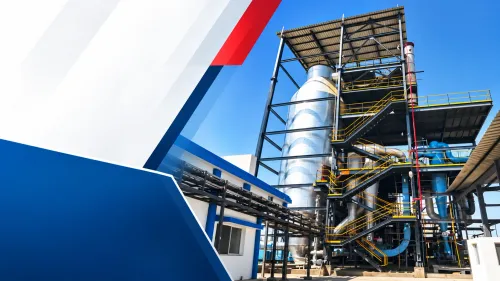
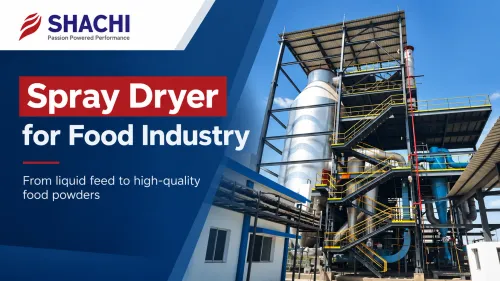
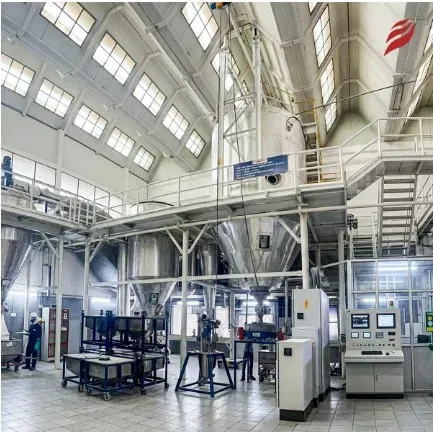
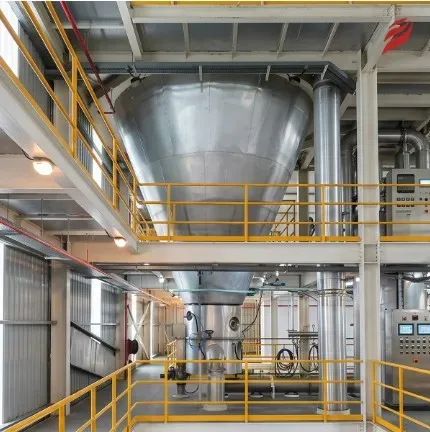
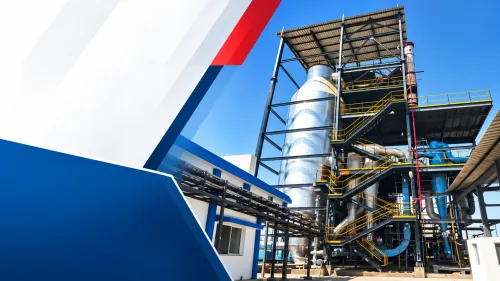
Spray Dryer Manufacturer | Industrial Spray Drying Plants The spray drying process begins with the preparation and controlled feeding of the liquid product into the drying chamber. Depending on the feed characteristics, the liquid is atomized using a suitable nozzle or rotary atomizer, breaking it into a fine spray of droplets. These droplets come into contact with a carefully controlled stream of hot drying air. Because each droplet has a very large surface area relative to its volume, moisture evaporates rapidly. The liquid droplets progressively transform into solid or semi-solid particles, which are then separated from the drying air and collected as powder. The basic process can be summarized as: Liquid feed → Atomization → Hot-air contact → Rapid moisture evaporation → Particle formation → Powder separation → Finished product Designed around the product—not just the equipment A major advantage of Shachi’s approach is that the Spray Dryer is designed according to the specific behaviour of the feed material and the required properties of the final powder. Different liquids can behave very differently during drying. Some may be heat-sensitive, sticky, viscous, highly concentrated, or prone to forming deposits on the drying chamber walls. Others may require specific particle morphology, high solubility, or a narrow particle-size distribution. Shachi considers factors such as: 1.Feed viscosity and solids concentration 2.Thermal sensitivity of the product 3.Inlet and outlet temperatures 4.Required final moisture content 5.Desired particle size 6.Bulk density and powder morphology 7.Flowability and dispersibility 8.Solubility or reconstitution requirements 9.Product recovery requirements 10.Production capacity This product-focused design philosophy helps ensure that the dryer is optimized not only for moisture removal, but also for the quality and functionality of the final powder. Precise atomization for controlled particle size Atomization is one of the most important stages of spray drying because the size of the droplets largely influences the characteristics of the finished powder. Shachi systems can be configured with appropriate atomization technology according to the application. By controlling droplet formation and drying conditions, manufacturers can achieve the desired particle-size distribution, particle morphology, density, and flow characteristics. This is especially important when the powder must meet strict specifications for downstream processes such as blending, filling, tableting, encapsulation, dissolution, or further formulation. Gentle drying for heat-sensitive materials Although spray drying uses hot air, the actual product temperature can be significantly lower than the incoming air temperature because evaporation consumes heat. This makes spray drying suitable for many products where rapid moisture removal with controlled thermal exposure is important. Shachi's systems can be engineered around the thermal sensitivity of the product, with appropriate control of air temperatures, residence time, feed conditions, and powder discharge. The objective is to achieve efficient drying while minimizing undesirable effects such as thermal degradation, discoloration, loss of functionality, or changes in product characteristics. Better powder recovery and process efficiency Efficient powder collection is another important consideration in spray dryer design. The drying system can incorporate suitable cyclones, bag filters, scrubbers, or other powder-recovery arrangements, depending on the product and process requirements. Effective separation helps maximize product recovery while maintaining a clean and controlled exhaust system. Proper airflow management and process control also help reduce powder losses and improve overall plant efficiency.

6814772a5d263414004dd4a4 Card 2

product image
Beading Plant/ Spray Cooler

Many oleochemical products—including fatty acids, castor-oil derivatives, waxy materials, and other molten formulations—are difficult to handle, store, transport, and dose in their liquid or solidified bulk form. Shachi’s beading technology addresses this challenge by converting the molten material directly into individual particles. The molten product is first maintained at a carefully controlled temperature to ensure consistent flow and atomization. It is then dispersed through a specially designed spraying system, which breaks the molten material into fine droplets of controlled size. These droplets come into contact with a controlled cooling medium, allowing them to rapidly lose heat and solidify into individual beads. Because the droplet size and cooling conditions can be precisely controlled, the resulting product can achieve a narrow and consistent particle-size distribution. Controlled particle size and shape One of the major advantages of Shachi’s beading systems is the ability to produce particles tailored to the customer's requirements. Parameters such as: 1.Feed temperature 2.Melt viscosity 3.Atomization conditions 4.Spray rate 5.Cooling-air temperature 6.Cooling-air flow 7.Nozzle configuration 8.Residence time can be optimized to control the final bead size, shape, hardness, and bulk characteristics. The result is a product that is easier to handle, convey, weigh, blend, package, store, and dose compared with bulk molten material or irregular solidified lumps. Ideal for oleochemicals and fatty-acid products Shachi’s Spray Cooling and Beading technology is particularly suited to products that are processed in molten form and need to be converted into solid particulate form. Typical applications include fatty acids, castor-oil derivatives, oleochemical intermediates, waxes, and other molten organic materials. The process can help eliminate the need for large-scale solidification followed by crushing, milling, or flaking. Instead, the material can be transformed into a particulate product in a single, continuous solidification operation. Improved product handling Free-flowing beads offer several practical advantages over flakes, blocks, or irregular solidified masses. Their uniform shape and size can improve: Flowability: Individual particles are less prone to forming large lumps and can be handled more easily through hoppers, conveyors, and packaging systems. Dosing accuracy: Controlled particle size makes it easier to feed and meter the product consistently. Storage and transportation: Beaded products are generally easier to package and transport than molten or irregular bulk solids. Downstream processing: Uniform particles can improve blending, dissolution, melting, and formulation operations. ontinuous and efficient production Shachi’s systems are engineered for continuous production, enabling molten feed to be introduced, atomized, cooled, and collected as solid beads in a controlled process. The spray-cooling approach also provides a high surface area for heat transfer. This enables rapid removal of heat from the droplets and efficient solidification, while process parameters can be adjusted according to the thermal and physical properties of the product.

6814772a5d263414004dd4a4 Card 2

product image
Spin Flash Dryer

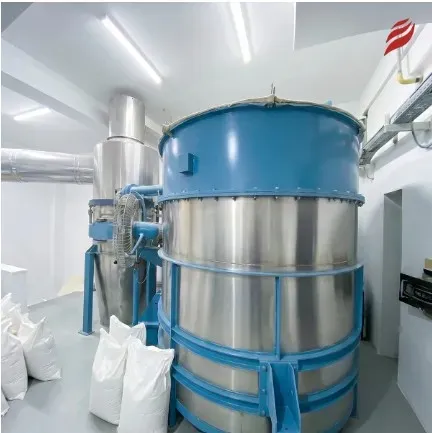
Spin Flash Dryer Manufacturer | High-Speed Drying of Powders, Crystals & Granules he wet feed material is introduced into the drying chamber, where a specially designed high-speed spin agitator rotor rapidly breaks up and disperses the feed. This is particularly important for materials that enter the dryer as lumps, cakes, pastes, or highly cohesive masses. At the same time, a controlled stream of hot drying air enters the chamber and forms a turbulent vortex. The rotor throws the wet material into this hot-air stream, creating intimate contact between the individual particles and the heated air. The intense mixing and dispersion produce a very large effective surface area for moisture evaporation. As a result, moisture is removed extremely rapidly—often within seconds, depending on the material, moisture content, particle characteristics, and operating conditions. From wet cake to free-flowing powder The key advantage of the Spin Flash Drying process is that it does not simply heat and dry a large wet mass. Instead, the rotor continuously breaks down the feed into smaller particles or fragments while drying takes place. This prevents the formation of large, persistent wet lumps and promotes uniform drying throughout the material. As the particles dry, they become lighter and are carried upward by the drying air. Properly dried particles leave the drying chamber with the air stream, while heavier or insufficiently dried material remains in the lower section of the chamber, where the rotor provides additional dispersion and drying. This creates a self-regulating drying environment in which residence time is closely related to particle moisture and size. Tight control over the final product Shachi’s Spin Flash Dryer provides significant control over important product characteristics, including: 1.Final moisture content 2.Particle size and distribution 3.Bulk density 4.Product temperature 5.Residence time 6.Drying-air temperature 7.Feed rate 8.Rotor speed 9.Airflow By adjusting these parameters, the dryer can be configured to produce a consistent powder suited to downstream handling, packaging, blending, granulation, or further processing.

6814772a5d263414004dd4a4 Card 2

product image
Multi-Effect Evaporator (MEE)

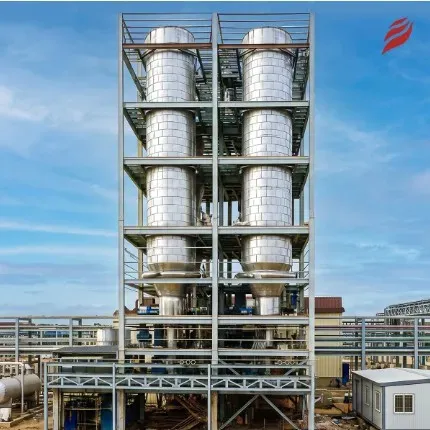
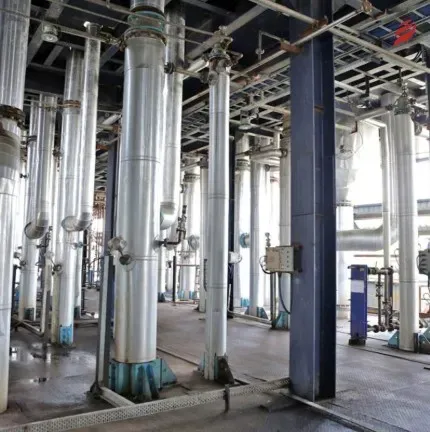
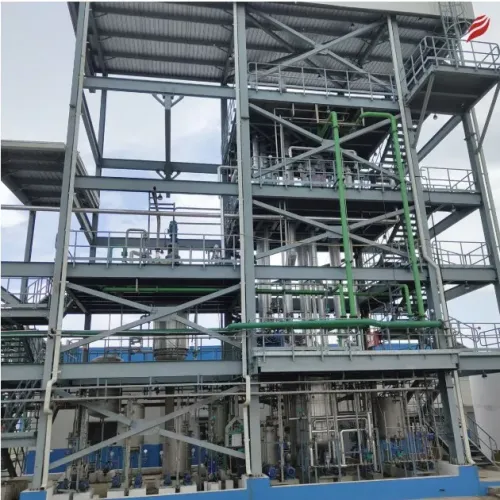
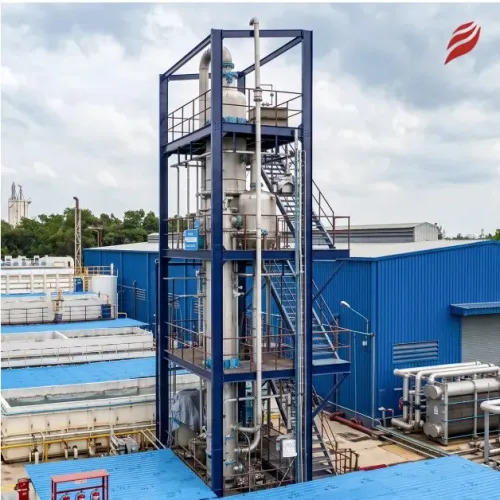
Multi effect evaporator plant | Multi-Effect Evaporator (MEE) | Energy-Efficient Concentration for Process & ETP Concentrate industrial liquids, process streams, and effluents with reduced steam consumption using Shachi’s Multi Effect Evaporator (MEE) plants. Designed for continuous industrial operation, MEE technology makes effective use of the heat already generated within the evaporation process, allowing industries to achieve the desired concentration while reducing dependence on fresh steam. A Multi Effect Evaporator consists of multiple evaporation stages, known as effects, operating at progressively lower pressures and boiling temperatures. Vapour generated in one effect is reused as the heating medium for the next effect. This cascading use of vapour allows the same thermal energy to be utilized multiple times, significantly improving the overall efficiency of the evaporation process. How Multi Effect Evaporation Works The feed enters the first effect, where heat from fresh steam or another suitable heating source causes a portion of the water to evaporate. The vapour generated from this first effect is not simply discharged. Instead, it is directed to the heating side of the second effect. Because the second effect operates at a lower pressure, the liquid inside it boils at a lower temperature. The vapour from the first effect can therefore provide the required heating energy. The same principle continues through subsequent effects: 1.Fresh steam supplies heat to the first effect. 2.Vapour generated in the first effect heats the second effect. 3.Vapour from the second effect heats the third effect. 4.The process continues through the remaining effects. 5.The final concentrated product is discharged from the last stage. By reusing vapour across multiple stages, the MEE plant can achieve a higher evaporation capacity for a given amount of fresh steam compared with a single-effect evaporator. Why Multiple Effects Reduce Steam Consumption In a conventional single-effect evaporator, a large amount of the heat supplied to evaporate water is effectively used only once. In an MEE, the vapour produced during evaporation becomes a useful source of heating energy for the next effect. This heat-reuse principle improves the steam economy of the system. The number of effects, operating temperatures, feed characteristics, evaporation duty, and system configuration determine the actual steam consumption and energy performance. For industries handling large volumes of liquid that require continuous concentration, this can translate into significant savings in thermal energy and operating costs. Designed for Industrial and Wastewater Applications Shachi MEE systems can be engineered for a wide range of applications where water needs to be removed and dissolved solids or valuable components need to be concentrated. Typical applications include: 1.Industrial wastewater concentration 2.High-TDS effluent treatment 3.Chemical and specialty chemical processes 4.Pharmaceutical process streams 5.Textile and dyeing effluents 6.Food and beverage concentration 7.Salt and chemical recovery 8.Process liquor concentration 9.RO reject concentration 10.ZLD system applications 11.Mother liquor and recycle-stream concentration 12.Application-Specific Evaporator Design Every feed behaves differently during evaporation. Some streams may be highly viscous, while others may have a high scaling tendency, foaming behaviour, suspended solids, or heat-sensitive components. Shachi designs MEE plants around the actual characteristics of the feed and the required process outcome. Important considerations include: 1.Feed flow rate 2.Initial and final solids concentration 3.TDS and dissolved salt composition 4.COD and organic content 5.Viscosity 6.Scaling and fouling tendency 7.Foaming characteristics 8.Heat sensitivity 9.Required evaporation capacity 10.Desired final concentration 11.Available steam pressure 12.Cooling-water availability 13.Condensate requirements 14.Plant layout and available space This approach helps ensure that the evaporator configuration, number of effects, heat-transfer arrangement, circulation system, and operating conditions are matched to the application.

6814772a5d263414004dd4a4 Card 2

product image
Agitated Thin Film Dryer (ATFD)

Agitated Thin Film Dryer (ATFD) | Final-Stage Drying for Concentrated Slurries, High TDS Effluent & ZLD Systems When concentrated slurry, viscous residue, high-TDS effluent, or other challenging process streams need to be converted into dry or near-dry solids, conventional drying methods can often face significant operational limitations. Sticky materials may adhere to heat-transfer surfaces, highly concentrated feeds can form hard deposits, and viscous products may be difficult to circulate or distribute evenly. An Agitated Thin Film Dryer (ATFD) is specifically designed to handle these demanding applications. The system continuously spreads the incoming feed into a thin, rapidly renewed film over a heated cylindrical surface. A rotating agitator maintains the film, promotes continuous mixing, and helps prevent excessive buildup on the heat-transfer surface. This creates an efficient and controlled drying environment, allowing moisture to be removed progressively while the concentrated material moves through the dryer toward the solids discharge. How the Process Works The concentrated feed enters the dryer and is distributed along the heated internal surface. A high-speed or suitably designed rotating agitator continuously spreads and renews the material as a thin film. Because the product remains in close contact with the heated surface, heat can be transferred efficiently into the feed. As moisture evaporates, the material becomes progressively more concentrated and eventually forms a dry or semi-dry solid. The agitator continuously moves the material forward while breaking up deposits and maintaining an active heat-transfer surface. The resulting dried material can then be discharged for further handling, cooling, packaging, disposal, recovery, or downstream processing. Designed for Difficult Industrial Feeds One of the major advantages of ATFD technology is its ability to process feeds that can be difficult to handle using conventional dryers. These may include: 1.High-TDS wastewater concentrates 2.RO and MEE evaporator rejects 3.Concentrated industrial effluents 4.Chemical and specialty chemical residues 5.Pharmaceutical process residues 6.Concentrated slurries 7.Mother liquors 8.Sticky and viscous products 9.Salt-rich streams 10.Scaling and crystallizing materials 11.Zero Liquid Discharge (ZLD) concentrates 12.High-solids process streams 13.Better Heat Transfer Through Thin-Film Operation In conventional drying systems, thick layers of material can develop on the heating surface, increasing thermal resistance and reducing drying efficiency. ATFD technology addresses this challenge by continuously maintaining a thin layer of material. The thin film provides a relatively short path for heat to travel through the product, supporting efficient heat transfer and faster moisture removal. Continuous agitation also helps expose fresh material to the heated surface, maintaining more consistent drying conditions. The actual heat-transfer performance depends on feed properties, operating temperature, viscosity, solids concentration, and system configuration, but the thin-film principle is particularly valuable for difficult-to-dry materials. Continuous Agitation for Reliable Operation The agitator is a critical part of the ATFD design. It continuously renews the product film, moves the material through the dryer, and helps control the formation of deposits. For feeds that tend to become sticky, viscous, or crystalline during concentration, maintaining movement across the heated surface can significantly improve operational reliability compared with static or poorly mixed drying arrangements. As the feed becomes progressively drier, the agitator also assists in transporting the resulting solids toward the discharge section. Controlled Final Drying ATFD systems can be designed to achieve a defined final moisture or dryness level according to the application requirement. Operating parameters such as heating-medium temperature, feed rate, vacuum level where applicable, residence time, agitator speed, and feed concentration can be optimized to achieve the required drying performance. This provides better control over the transition from concentrated liquid or slurry to dry or semi-dry solids.

6814772a5d263414004dd4a4 Card 2

product image
Integrated Fluidised Bed Spray Dryer

Integrated Fluidised Bed Spray Dryer Manufacturer | Multi-Stage Spray Dryer | Spray Dryer with Fluid Bed Convert liquid feed, slurry, emulsion, or solution into a consistent, free-flowing powder with improved control over final moisture, particle size, bulk density, flowability, and overall powder behaviour. Shachi’s Integrated Fluidised Bed Spray Dryer combines spray drying and fluidised bed drying in a single continuous process, providing greater control over the complete powder-drying cycle. The system is designed for applications where conventional spray drying alone may not provide the desired final moisture, powder structure, or handling characteristics. By integrating a fluidised bed directly with the spray drying chamber, the process can efficiently manage both initial moisture removal and final powder conditioning. Two-Stage Drying in One Integrated System The process begins with the liquid feed being atomized into fine droplets inside the spray drying chamber. Hot drying air rapidly removes a major portion of the moisture, transforming the liquid feed into partially dried particles. Instead of pushing these particles directly toward final discharge, the integrated fluidised bed provides a controlled second stage of drying. The partially dried powder enters the fluidised bed, where controlled hot air continues to remove the remaining moisture. This two-stage approach allows the drying duty to be distributed more effectively: 1.Spray drying: Rapid removal of the majority of moisture and formation of powder particles. 2.Fluidised bed drying: Controlled removal of residual moisture. 3.Cooling: Brings the powder to a suitable discharge temperature. 4.Conditioning: Helps improve powder flowability, handling, and product consistency. 5.Final discharge: Produces a more stable powder with controlled moisture and desired physical characteristics. 6.Better Control Over Final Powder Quality Powder quality is influenced by much more than simply achieving a target moisture level. Particle size distribution, bulk density, porosity, flowability, stickiness, agglomeration, and thermal exposure can all affect how the final powder performs during storage, transportation, packing, and downstream processing. Shachi’s integrated design provides additional control over these characteristics by allowing the spray drying and final drying stages to be controlled independently within one continuous system. Depending on the application, process parameters such as feed concentration, atomization conditions, inlet and outlet temperatures, air flow, fluidisation conditions, residence time, and final-bed temperature can be optimized to achieve the required powder properties. Improved Powder Handling and Flowability Many industrial powders can become sticky, cohesive, or difficult to handle when discharged directly from a spray dryer at higher temperatures or with residual moisture. The integrated fluidised bed helps address these challenges by providing a controlled environment for final drying, cooling, and powder conditioning. This can help produce powders that are easier to convey, store, pack, and process. The system can also be configured for controlled agglomeration where the application requires improved instant properties, dispersibility, or powder handling characteristics. Key Benefits of Shachi Integrated Fluidised Bed Spray Dryer 1.Two-stage drying in one continuous system 2.Better control over final moisture content 3.Improved control of particle size and powder characteristics 4.Integrated final drying and cooling 5.Improved powder flowability and handling 6.Potential for controlled agglomeration and powder conditioning 7.Reduced risk of excessive thermal exposure during final drying 8.Consistent powder quality for continuous production 9.Suitable for a wide range of liquid feeds, solutions, slurries, and emulsions 10.Flexible process configuration based on product requirements 11.Designed for efficient integration with cyclones, bag filters, heat-recovery systems, and powder-handling equipment

6814772a5d263414004dd4a4 Card 2

product image
Zero Liquid Discharge Plants

ZLD Plant Manufacturer | Zero Liquid Discharge Systems for Compliance & Water Reuse Turn wastewater from a disposal challenge into a valuable resource for your industrial operation. As a trusted Zero Liquid Discharge (ZLD) technology provider and manufacturer, Shachi designs and delivers integrated ZLD systems that are engineered to recover water, reduce freshwater consumption, and minimize liquid waste generation. Shachi’s ZLD solutions combine proven pretreatment, membrane-based separation, evaporation, and crystallization technologies into a carefully integrated treatment process. The objective is to maximize water recovery while concentrating the remaining dissolved salts and contaminants into a manageable solid form, helping industries move toward minimal liquid discharge and improved water sustainability. Integrated Treatment from Wastewater to Water Recovery A successful ZLD system requires more than individual treatment technologies. Each stage must work together based on the characteristics of the wastewater, the required recovery, and the final salt-management objective. Shachi designs the complete treatment train around your specific wastewater profile: Pretreatment – Removes suspended solids, hardness, organics, and other constituents that can affect downstream membrane and evaporation performance. Membrane Treatment – RO and other membrane processes recover a significant portion of the wastewater as reusable-quality water while concentrating dissolved contaminants. Evaporation – MVR or other suitable evaporator technologies further concentrate the high-TDS reject stream while recovering additional water in the form of condensate. Crystallization – Converts the remaining concentrated salts into a solid form, minimizing or eliminating the need for liquid discharge. Water Recovery & Reuse – Treated water and condensate can be routed back for suitable industrial applications, helping reduce dependence on freshwater sources. Designed Around Your Wastewater Every industrial wastewater stream behaves differently. ZLD systems therefore need to be designed according to the actual process conditions rather than using a standard configuration. Shachi engineers ZLD plants based on parameters such as flow rate, TDS, COD, hardness, silica, chloride, sulphate, feed variability, scaling potential, fouling behaviour, salt composition, required water recovery, available utilities, and plant footprint. This application-specific approach helps improve system reliability and allows the ZLD plant to perform consistently under real industrial operating conditions. Reduce Freshwater Consumption One of the most important benefits of ZLD is the opportunity to recover and reuse water that would otherwise leave the facility as wastewater. By integrating membrane treatment, evaporation, and condensate recovery, industries can recycle a substantial portion of their wastewater back into appropriate process or utility applications. This can reduce freshwater intake, improve overall water-use efficiency, and support long-term water-security goals. Minimize Liquid Discharge Traditional wastewater treatment may still leave behind concentrated reject streams that require further treatment or disposal. ZLD takes the treatment process further by concentrating these residual streams until the remaining dissolved solids can be recovered as solid salts or crystallized material. This significantly reduces the dependence on liquid discharge routes and can support industries operating in locations where wastewater discharge is restricted or where water reuse is a strategic priority. Key Benefits of Shachi ZLD Systems 1.High water recovery and reduced freshwater consumption 2.Significant reduction or elimination of liquid wastewater discharge 3.Integrated combination of pretreatment, membranes, evaporation, and crystallization 4.Effective handling of high-TDS and difficult industrial effluents 5.Recovery of water for suitable process and utility reuse 6.Conversion of concentrated wastewater into solid salt/crystallized residue 7.Designed for integration with MVR evaporators and other energy-efficient technologies 8.Application-specific design based on feed chemistry and operating conditions 9.Improved control over wastewater management and disposal 10.Potential reduction in long-term freshwater and wastewater-management costs 11.Scalable solutions for different industrial capacities and process requirements 12.Built for Industries with Challenging Effluent Shachi ZLD solutions are suitable for industries where water recovery and effluent management are critical, including chemical, pharmaceutical, textile, dye and pigment, specialty chemical, food processing, and other water-intensive manufacturing industries. The system can be designed as a complete end-to-end ZLD plant or integrated with existing ETP, RO, evaporator, and wastewater-treatment infrastructure.

6814772a5d263414004dd4a4 Card 2

product image
MVR Evaporator

Mechanical Vapor Recompression Evaporator Manufacturer in India Concentrate industrial liquids and effluents with significantly lower fresh-steam consumption using Shachi’s Mechanical Vapour Recompression (MVR) Evaporator systems. Designed for energy-efficient continuous operation, Shachi MVR technology recycles the vapour generated during the evaporation process and compresses it to increase its temperature. This recovered vapour is then reused as the heating medium, reducing the need for continuous fresh steam input. Unlike conventional evaporation systems that depend heavily on external steam, MVR minimizes energy wastage by recovering and reusing the vapour within the process. This can substantially reduce thermal energy consumption and help lower recurring operating costs, particularly in applications where evaporation is a continuous and energy-intensive operation. Shachi’s MVR Evaporators are engineered according to the actual characteristics of your process rather than relying on a one-size-fits-all design. The system can be configured based on feed composition, flow rate, solids concentration, desired final concentration, boiling characteristics, fouling tendency, viscosity, temperature sensitivity, available utilities, and available plant space. Built for Diverse Industrial Applications Shachi MVR systems can be applied across a wide range of industries, including: Chemical industries – concentration of process streams, salts, chemicals, and industrial effluents Pharmaceutical industries – concentration of process liquids and heat-sensitive solutions Food & beverage industries – concentration of liquid products and process streams Textile industries – treatment and concentration of textile wastewater and process effluents Wastewater treatment – volume reduction, effluent concentration, and integration with ZLD systems Specialty chemical applications – recovery and concentration of valuable materials from process streams Designed for Reliable Continuous Operation Industrial evaporation often involves challenging feed conditions, including high dissolved solids, variable composition, scaling, foaming, and fouling. Shachi’s MVR systems are designed with these practical operating conditions in mind. The evaporator configuration, heat-transfer system, circulation arrangement, material selection, and cleaning strategy can be selected according to the specific characteristics of the feed. The system can also be integrated with pre-treatment, crystallization, condensate recovery, RO systems, or other downstream treatment processes, depending on the overall process objective. Key Benefits of Shachi MVR Evaporators Lower fresh-steam requirement through mechanical vapour reuse Reduced thermal energy consumption compared with conventional evaporation approaches Lower operating costs for continuous evaporation applications Efficient concentration of high-volume industrial liquids and effluents Reduced wastewater volume for downstream treatment or disposal Suitable for high-TDS and challenging industrial streams Designed to address fouling, scaling, foaming, and viscosity-related challenges Flexible configuration based on feed and concentration requirements Compact and efficient design for optimized plant footprint Suitable for integration into Zero Liquid Discharge (ZLD) and wastewater recovery systems Designed for continuous industrial operation and process reliability Energy Efficiency That Supports Long-Term Operations The major advantage of MVR technology is that the system makes better use of the energy already present in the evaporation process. Instead of continuously rejecting generated vapour and replacing its heating value with fresh steam, the vapour is mechanically compressed and returned to the heating side of the evaporator. This approach can help industries reduce utility dependence, improve overall evaporation efficiency, and achieve more predictable operating economics. The actual energy and steam savings depend on the feed characteristics, evaporation duty, temperature rise, system configuration, and operating conditions.

6814772a5d263414004dd4a4 Card 2

product image
Effluent Treatment Plant (ETP)

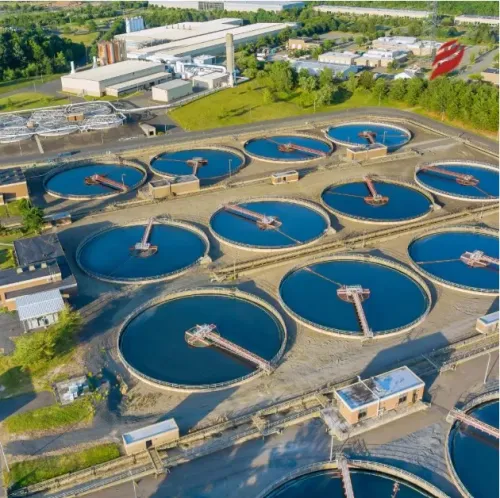
ETP Plant | Effluent Treatment Systems for Reliable Compliance Treat industrial wastewater reliably without the stress of daily firefighting. Shachi’s Effluent Treatment Plants (ETPs) are engineered to handle the real-world challenges of industrial wastewater, including variations in flow, pollutant load, pH, temperature, and production conditions. Our ETP solutions are designed around your specific wastewater characteristics and operating requirements, ensuring stable treatment performance even when influent conditions fluctuate. With robust process design, appropriate treatment technologies, and effective process control, the system helps maintain consistent treated-water quality and supports compliance with applicable discharge standards. Beyond treatment efficiency, Shachi focuses on operational reliability and predictable OPEX. The plants are designed to optimize chemical consumption, energy usage, sludge generation, and manpower requirements, helping you control recurring operating costs over the long term. From equalization and primary treatment to biological treatment, tertiary treatment, sludge management, and automation, every stage is integrated to create a dependable wastewater treatment system—not one that requires constant manual intervention. With Shachi’s ETPs, you get: 1.Consistent treatment despite variations in flow and wastewater load 2.Better control over pH, COD, BOD, TSS, and other key parameters 3.Reliable compliance with discharge requirements 4.Optimized chemical, power, and sludge-management costs 5.Reduced manual intervention and operational firefighting 6.Robust and scalable plant design for changing production conditions 7.Predictable and manageable operating costs 8.Improved overall plant reliability and uptime

Phone Number

08048128705

Please keep 0 before dialling the number.

Email Address sales@shachiengg.com

Mon-Thu: 10 AM - 2 PM • Fri: 3 PM - 7AM

Other Website Visit our other website
Address Plot No. 271, Survey. No.38, Mauje Bhare, Mulshi, Pirangut, Pune

Pune, India, 412115