Riyadh, Saudi Arabia
08048040681
+917558636100
Zero Liquid Discharge Plants

Zero Liquid Discharge Plants

In stock•cod not available
Phone Number

08048040681

Please keep 0 before dialling the number.

Email Address sales@shachiengg.com

Mon-Thu: 10 AM - 2 PM • Fri: 3 PM - 7AM

Other Website Visit our other website
Address Riyadh , Riyadh Province , Saudi Arabia

Riyadh, Saudi Arabia, Saudi Arabia, 11461

Description

ZLD Plant Manufacturer | Zero Liquid Discharge Systems for Compliance & Water Reuse Turn wastewater from a disposal challenge into a valuable resource for your industrial operation. As a trusted Zero Liquid Discharge (ZLD) technology provider and manufacturer, Shachi designs and delivers integrated ZLD systems that are engineered to recover water, reduce freshwater consumption, and minimize liquid waste generation. Shachi’s ZLD solutions combine proven pretreatment, membrane-based separation, evaporation, and crystallization technologies into a carefully integrated treatment process. The objective is to maximize water recovery while concentrating the remaining dissolved salts and contaminants into a manageable solid form, helping industries move toward minimal liquid discharge and improved water sustainability. Integrated Treatment from Wastewater to Water Recovery A successful ZLD system requires more than individual treatment technologies. Each stage must work together based on the characteristics of the wastewater, the required recovery, and the final salt-management objective. Shachi designs the complete treatment train around your specific wastewater profile: Pretreatment – Removes suspended solids, hardness, organics, and other constituents that can affect downstream membrane and evaporation performance. Membrane Treatment – RO and other membrane processes recover a significant portion of the wastewater as reusable-quality water while concentrating dissolved contaminants. Evaporation – MVR or other suitable evaporator technologies further concentrate the high-TDS reject stream while recovering additional water in the form of condensate. Crystallization – Converts the remaining concentrated salts into a solid form, minimizing or eliminating the need for liquid discharge. Water Recovery & Reuse – Treated water and condensate can be routed back for suitable industrial applications, helping reduce dependence on freshwater sources. Designed Around Your Wastewater Every industrial wastewater stream behaves differently. ZLD systems therefore need to be designed according to the actual process conditions rather than using a standard configuration. Shachi engineers ZLD plants based on parameters such as flow rate, TDS, COD, hardness, silica, chloride, sulphate, feed variability, scaling potential, fouling behaviour, salt composition, required water recovery, available utilities, and plant footprint. This application-specific approach helps improve system reliability and allows the ZLD plant to perform consistently under real industrial operating conditions. Reduce Freshwater Consumption One of the most important benefits of ZLD is the opportunity to recover and reuse water that would otherwise leave the facility as wastewater. By integrating membrane treatment, evaporation, and condensate recovery, industries can recycle a substantial portion of their wastewater back into appropriate process or utility applications. This can reduce freshwater intake, improve overall water-use efficiency, and support long-term water-security goals. Minimize Liquid Discharge Traditional wastewater treatment may still leave behind concentrated reject streams that require further treatment or disposal. ZLD takes the treatment process further by concentrating these residual streams until the remaining dissolved solids can be recovered as solid salts or crystallized material. This significantly reduces the dependence on liquid discharge routes and can support industries operating in locations where wastewater discharge is restricted or where water reuse is a strategic priority. Key Benefits of Shachi ZLD Systems 1.High water recovery and reduced freshwater consumption 2.Significant reduction or elimination of liquid wastewater discharge 3.Integrated combination of pretreatment, membranes, evaporation, and crystallization 4.Effective handling of high-TDS and difficult industrial effluents 5.Recovery of water for suitable process and utility reuse 6.Conversion of concentrated wastewater into solid salt/crystallized residue 7.Designed for integration with MVR evaporators and other energy-efficient technologies 8.Application-specific design based on feed chemistry and operating conditions 9.Improved control over wastewater management and disposal 10.Potential reduction in long-term freshwater and wastewater-management costs 11.Scalable solutions for different industrial capacities and process requirements 12.Built for Industries with Challenging Effluent Shachi ZLD solutions are suitable for industries where water recovery and effluent management are critical, including chemical, pharmaceutical, textile, dye and pigment, specialty chemical, food processing, and other water-intensive manufacturing industries. The system can be designed as a complete end-to-end ZLD plant or integrated with existing ETP, RO, evaporator, and wastewater-treatment infrastructure.

Keywords

Other Our Solution

view all

6814772a5d263414004dd4a4 Card 2

product image
Industrial Spray Dryer for Food Industry

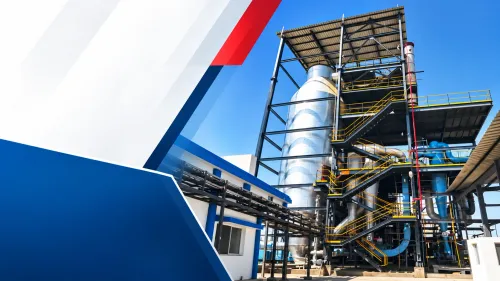
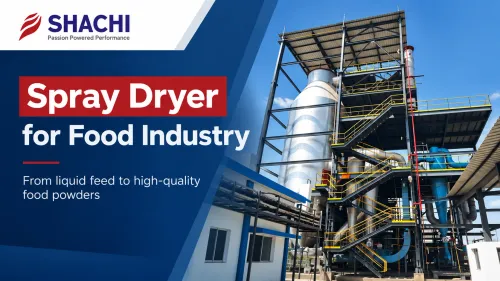
An industrial spray dryer for the food industry converts suitable liquid feeds, solutions, emulsions and slurries into powders through atomization and controlled moisture evaporation. Food ingredients differ in viscosity, solids content, composition and heat sensitivity. These differences influence equipment selection, drying conditions and final powder quality. Applications in Food Ingredient Manufacturing Industrial spray drying is used for: Flavours and Encapsulation: Converting suitable flavour emulsions into powders while considering aroma retention. Seasoning Ingredients: Producing powders for savoury blends and formulations. Fruit and Vegetable Extracts: Drying prepared concentrates into powdered ingredients. Coffee and Tea Extracts: Manufacturing soluble beverage powders. Maltodextrin and Starch Derivatives: Processing suitable carbohydrate solutions. Plant-Based Proteins: Drying selected protein dispersions. Functional Food Ingredients: Processing suitable nutritional formulations. Each product requires an individual process evaluation because identical drying conditions may not produce the same results. Why Feed Properties Matter in Spray Dryer Design Feed viscosity and solids concentration influence pumping, atomization, droplet formation and moisture evaporation. Heat-sensitive ingredients may require careful control to limit flavour loss, colour changes or degradation. Sticky formulations can increase chamber deposition and complicate powder recovery. Final moisture content, particle-size distribution, bulk density and flowability also influence equipment configuration. A food ingredients spray drying plant should therefore be designed around product requirements rather than production capacity alone. How Industrial Spray Drying Works The process involves five stages: 1. Feed Preparation: Establishing suitable concentration, viscosity and feed uniformity. 2. Atomization: Converting liquid feed into droplets inside the drying chamber. 3. Drying: Using heated air to evaporate moisture through heat and mass transfer. 4. Powder Recovery: Separating and collecting dried particles. 5. Powder Handling: Considering cooling, agglomeration or fluid-bed processing where required. These operations must work together to achieve the intended powder specifications. Engineering Considerations for Food Spray Drying Plants Drying Capacity: Feed rate, solids concentration and target moisture determine the evaporation duty. Powder Quality: Particle size, residual moisture, bulk density, solubility and flowability influence process requirements. Hygienic Design: Product-contact materials, cleaning accessibility and contamination prevention require appropriate consideration. Powder Recovery: Fine-particle collection, wall deposition and discharge arrangements affect plant operation. Process Control: Feed conditions and drying-air parameters must be monitored according to the application. An integrated fluid bed may be considered for suitable products requiring additional drying or powder conditioning. Selecting a Spray Dryer for Your Food Product Before selecting spray drying equipment for food processing, manufacturers should define: Product composition and feed characteristics Feed rate, viscosity and solids concentration Required powder production capacity Target moisture and particle-size distribution Bulk density and powder handling requirements Product thermal sensitivity Hygiene and cleaning requirements Available utilities and operating conditions Future capacity or product requirements These inputs establish the technical basis for equipment selection. Industrial Spray Drying Solutions by Shachi Engineering Shachi Engineering provides industrial spray drying equipment and engineering solutions for manufacturing applications. For food ingredient processing, technical evaluation connects feed properties, moisture removal, atomization, drying conditions and powder recovery with the required product specifications. Equipment configuration, food-grade construction options, automation and cleaning arrangements can be evaluated according to project requirements and available solutions. Discuss Your Food Spray Drying Requirements Planning a new food powder manufacturing facility, expanding production capacity or reviewing an existing drying process? Connect with Shachi Engineering to discuss your feed characteristics, powder specifications and production requirements for a suitable industrial spray drying solution.

6814772a5d263414004dd4a4 Card 2

product image
Spray Drying Plants for Food Ingredient Manufacturing

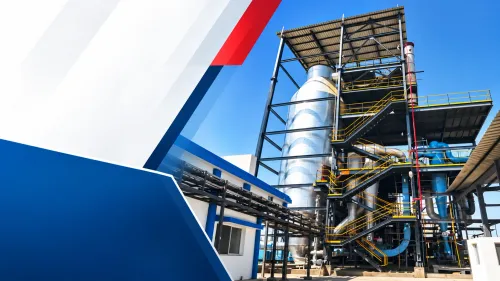
A Food Ingredients Spray Drying Plant converts suitable liquid ingredients, extracts, emulsions and concentrated solutions into dry powders. For manufacturers, plant selection involves more than choosing a drying chamber. Feed preparation, atomization, moisture removal, powder recovery and handling must operate as a coordinated process. Shachi Engineering provides industrial spray drying equipment and engineering solutions for food ingredient manufacturers planning new facilities, capacity expansion or process improvements. Applications in Food Ingredient Manufacturing Spray drying is used for suitable formulations across several applications: Flavours and Encapsulated Ingredients: Powdered flavours from emulsions and carrier-based formulations. Fruit and Vegetable Extracts: Powders from prepared liquid concentrates. Coffee and Tea Extracts: Soluble beverage ingredients. Maltodextrin and Starch Derivatives: Powders from carbohydrate solutions. Seasoning Ingredients: Powdered components for savoury formulations. Plant-Based Proteins: Selected protein dispersions and ingredient blends. Functional Food Ingredients: Suitable nutritional and specialty formulations. Each product needs its own assessment of feed behaviour and powder specifications. From Product Formulation to Plant Configuration Feed solids concentration, viscosity and thermal sensitivity influence atomization and drying. A concentrated carbohydrate solution, for example, may present different powder recovery challenges from a flavour emulsion. Protein formulations may require particular attention to thermal exposure and functional properties. Plant configuration should therefore reflect the product's behaviour, target powder quality and production duty—not nominal capacity alone. Key Systems in a Food Ingredients Spray Drying Plant Feed Preparation and Delivery: Maintains appropriate feed conditions before atomization. Atomization: Converts the liquid feed into droplets for moisture evaporation. Drying Chamber and Air System: Brings droplets into contact with heated air under controlled conditions. Powder Separation and Recovery: Collects dried particles through suitable recovery equipment. Powder Handling: Supports discharge, cooling or conditioning as required. Process Control: Monitors feed and drying-air conditions to support consistent operation. An integrated fluid bed may be considered for products requiring additional drying or powder conditioning. Engineering Considerations for Plant Selection Moisture Evaporation Duty: Feed rate, solids concentration and final moisture determine how much water must be removed. Powder Characteristics: Particle size, bulk density, solubility, flowability and residual moisture influence equipment and operating requirements. Product Recovery: Fine particles, stickiness and wall deposition can affect collection and operating continuity. Hygiene and Cleaning: Product-contact materials, cleaning access and contamination prevention must suit the application and applicable requirements. Operating Flexibility: Multi-product plants must account for different feed properties, process conditions and cleaning needs. Information Required for Plant Evaluation Before selecting a food ingredients spray drying plant, manufacturers should define: Product composition and formulation Feed rate, viscosity, temperature and solids concentration Required powder output and final moisture Target particle size, bulk density and handling properties Thermal sensitivity and product stability Utilities, operating schedule and cleaning requirements Future products and capacity expansion plans These inputs help establish the process and equipment design basis. Food Ingredients Spray Drying Solutions by Shachi Engineering Shachi Engineering provides spray drying equipment and engineering solutions for industrial processing applications. For food ingredient projects, technical evaluation connects feed characteristics, evaporation duty, powder recovery and operating requirements with the proposed plant configuration. Equipment arrangements, automation, cleaning features and project scope should be confirmed for the specific application. Discuss Your Food Ingredient Spray Drying Project Planning a new food powder facility or expanding an existing plant? Connect with Shachi Engineering to discuss your feed properties, production capacity and powder specifications for a suitable spray drying solution.