Astana
08048040885
+917030470233
Industrial Evaporators

Self Cleaning Evaporator

In stockcod not available
Phone Number

08048040885

Please keep 0 before dialling the number.

Mon-Thu: 10 AM - 2 PM • Fri: 3 PM - 7AM

Other Website Visit our other website
Address Astana , Astana , Kazakhstan

Astana, Kazakhstan, 10000

Description

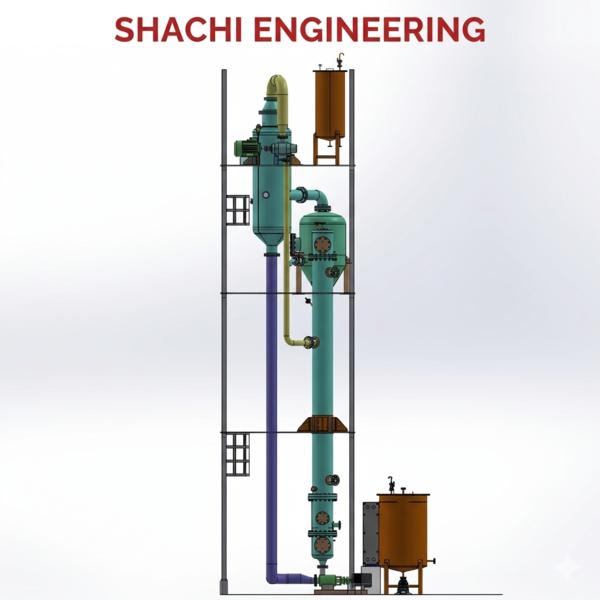
The Future of Zero-Fouling: Self-Cleaning Heat Exchanger & Evaporator Technology by Shachi Engineering In the high-stakes world of industrial processing, “fouling“ is the silent thief of profitability. Whether it is mineral scaling, organic growth, or chemical byproduct buildup, fouling creates a thermal barrier that forces boilers to work harder, drives up energy bills, and eventually brings production to a grinding halt for manual cleaning. At Shachi Engineering, we believe you shouldn't have to stop production to maintain it. Through our exclusive partnership with Netherlands-based Klaren International BV, we are bringing revolutionary Self-Cleaning Heat Exchanger Technology to the Indian market. This system doesn't just manage fouling—it eliminates it. 1. What is Self-Cleaning Technology? Developed by Klaren International BV and delivered in India by Shachi Engineering, this technology uses a fluidized bed of cleaning particles within the heat exchanger tubes. As the process fluid flows upward, it carries small ceramic or metal particles that constantly “scour“ the internal walls of the tubes. The Operating Principle Continuous Scouring: The fluidized particles create a mild abrasive effect that removes the boundary layer where fouling usually begins. Enhanced Turbulence: The movement of these particles increases the turbulence of the fluid, which actually improves the heat transfer coefficient beyond that of a standard exchanger. Online Operation: The cleaning happens while the machine is running. There is no need to bypass the system or shut down for high-pressure water jetting. 3. Maximizing ROI with Mechanical Vapor Recompression (MVR) To achieve the pinnacle of energy efficiency, Shachi Engineering integrates Self-Cleaning technology with Mechanical Vapor Recompression (MVR). How MVR Saves 41% of Primary Energy: In a standard evaporator, latent heat is often lost during condensation. With MVR: The vapor produced is compressed to increase its pressure and temperature. This “upgraded“ vapor is then fed back into the shell side of the heat exchanger. The latent heat is recovered, reducing the dependence on fresh steam by approximately 41%. 4. Industrial Applications: Where Self-Cleaning Wins This technology is a game-changer for industries dealing with “difficult“ fluids that are prone to rapid scaling: A. Effluent Treatment Plants (ETP) In Zero Liquid Discharge (ZLD) systems, high-salt brines often scale up traditional evaporators within days. Our self-cleaning technology keeps these systems running indefinitely, even with high-silica or calcium-rich wastewater. B. Chemical & Petrochemical Ideal for handling polymers, resins, and oil-based fluids where traditional cleaning is labor-intensive and hazardous. C. Food & Beverage Concentrating juices, dairy, or distillery spent wash often results in organic fouling. Self-cleaning technology maintains hygiene and constant throughput without chemical interference. D. Oil, Gas & Mining Processing produced water or mineral slurries requires robust equipment that can withstand abrasive and scaling environments. 5. From Revamp to New Installations Whether you are designing a new “Greenfield“ project or struggling with an existing “Brownfield“ plant that requires cleaning every week, Shachi Engineering provides: New Plant Design: Optimized, compact systems designed with zero-fouling logic from day one. Revamp Services: We can often retrofit your existing heat exchangers with Klaren self-cleaning technology to restore lost capacity. 6. Conclusion: A Partnership for the Future By combining the Dutch innovation of Klaren International with the local manufacturing and commissioning expertise of Shachi Engineering, we provide Indian industries with a path to “Maintenance-Free“ evaporation. Save on maintenance, increase your uptime, and join the ranks of global leaders moving toward sustainable, continuous production. Strategic Benefits: The Shachi-Klaren Advantage

Compact Design No need to "over-dimension" the heat exchanger to account for future fouling. // Lower CAPEX & Space Savings.
Zero Chemical Usage No need for anti-scalant additives or harsh acid cleaning. // No Hazardous Waste Streams.
Enhanced Productivity Eliminates downtime for cleaning. Capacity remains constant at 100% throughout the year. // Higher Annual Yield.
Superior Energy Performance Tubes remain 100% clean, ensuring constant heat transfer and lower fuel consumption. // Reduced Carbon Footprint.

Keywords

Other Our Solution

view all

6814772a5d263414004dd4a4 Card 2

product image
ZLD Plant

In an era of depleting freshwater resources and stringent environmental mandates by the Central Pollution Control Board (CPCB), the concept of Zero Liquid Discharge (ZLD) has transitioned from a regulatory “burden“ to a strategic industrial advantage. As a premier ZLD plant manufacturer in India, Shachi Engineering designs advanced systems that go beyond simple compliance. Our technology ensures that not a single drop of processed wastewater leaves your facility, transforming a waste stream into a valuable source of recycled water and reusable by-products. What is a Zero Liquid Discharge (ZLD) Plant? A Zero Liquid Discharge (ZLD) plant is a sophisticated engineering system designed to eliminate the discharge of liquid waste from industrial processes. While traditional wastewater treatment plants treat water to a level safe for discharge into sewers or rivers, a ZLD plant closes the loop entirely. The objective is twofold: 1 Recover 95% to 99% of water for reuse in cooling towers, boilers, or gardening. 2 Consolidate contaminants into a dry, solid form for safe disposal or industrial resale. The Triple Benefit of ZLD Implementation I. Comprehensive Waste Minimization Traditional treatment methods often leave a concentrated brine that is difficult to manage. ZLD technology pushes the limits of separation science to ensure that the only “output“ from your facility is clean water and solid crystals. II. Water Security and Conservation India is facing a critical water crisis. For industries in water-stressed regions, a ZLD plant acts as an internal reservoir. By recycling treated water for boiler feed, domestic gardening, and floor washing, industries can reduce their dependence on expensive municipal water tankers or groundwater. III. Value Creation from Waste (Circular Economy) ZLD isn't just about disposal; it’s about recovery. In many chemical and textile applications, the “waste“ contains valuable salts (like Sodium Sulfate or Sodium Chloride) that can be recovered through crystallization and resold, or chemicals that can be fed back into the primary production line. The Working Principle: A Multi-Stage Engineering Approach Achieving “Zero“ discharge requires a combination of membrane technology and thermal engineering. At Shachi Engineering, we follow a rigorous four-stage process: Stage 1: Advanced Pre-treatment Before the water hits the evaporators, it must be conditioned. Screening & Filtration: Removing suspended solids and large particles. pH Correction: Adjusting acidity/alkalinity to prevent equipment corrosion. Chemical Dosing: Removing heavy metals and hardness that could cause scaling in the membranes. Stage 2: Membrane Concentration (RO) To reduce energy costs, we first use Reverse Osmosis (RO). The RO system squeezes out the “easy“ water, concentrating the brine. This significantly reduces the volume of water that needs to be boiled in the next stage, saving massive amounts of energy. Stage 3: Thermal Evaporation The concentrated brine from the RO stage enters the Evaporator (often an MVR or Multi-Effect Evaporator). Here, the water is converted into steam, leaving behind a thick slurry. The steam is condensed back into high-purity distilled water. Stage 4: Crystallization and Final Drying The final slurry is fed into a Crystallizer or an Agitated Thin Film Dryer (ATFD). This stage removes the final traces of moisture, converting the slurry into a dry, stable powder or solid salt ready for landfill or resale. Why Shachi Engineering is the Leading ZLD Manufacturer in India Our systems are engineered to solve the “pain points“ of traditional ZLD plants, such as high energy costs and frequent downtime. Customized Heat Integration: We design our plants so that the heat from one stage (like vapor) is used to pre-heat the liquid in another, drastically lowering the cost per kilo of water recovered. Robust Material Selection: Industrial wastewater is often highly corrosive. We use superior MOCs to ensure our plants operate for decades with minimal maintenance. Scalability for Growth: Our modular designs allow your ZLD plant to grow as your production capacity increases. Environmental Compliance: We guarantee that our plants meet and exceed all CPCB/SPCB discharge standards, protecting your business from legal risks. Industrial Applications of ZLD Systems Power Generation: Managing cooling tower blowdown and boiler blowdown. Petrochemicals: Treating complex oily and saline wastewater. Pharmaceuticals: Recovering solvents and handling high-TDS API waste. Textiles: Dealing with high-color and high-salt dye bath effluent. Distilleries: Converting spent wash into fertilizer or dry powder.
6814772a5d263414004dd4a4 Card 2

product image
Spray Cooling Plant

In the specialized world of chemical processing, converting molten liquids into uniform, free-flowing solid beads is a critical step for downstream packaging and application. Spray Cooling, also known as Spray Congealing or Beading, is the technology of choice for materials that melt at manageable temperatures but require a high degree of particle uniformity. This guide explores the engineering behind Shachi Engineering’s advanced spray cooling systems, designed specifically for the rigorous demands of fatty acid and castor oil derivatives. What is Spray Cooling (Congealing)? Spray cooling is a thermal process where a molten raw material is transformed into solid, spherical granules or beads through contact with chilled air. Unlike spray drying, which removes moisture through evaporation, spray congealing involves a phase change from liquid to solid without the removal of mass. The Significance of Spherical Morphology The goal of a beading plant is to produce particles with excellent flowability. Spherical beads (ranging from 300 to 1000 microns) minimize dust, prevent caking, and allow for precise dosing in secondary manufacturing processes. The Operating Principle: From Melt to Bead The efficiency of a congealing plant depends on the precise intersection of fluid dynamics and thermodynamics. Step 1: Molten Feed and Atomization The process begins with the raw material in a molten state. This liquid is pumped to the top of the spray chamber, where it is atomized. The design of the nozzles is the most critical factor here. Shachi Engineering utilizes a meticulous distribution pattern to ensure that the initial droplets are uniform in size. Step 2: Heat Exchange with Chilled Air A stream of equally distributed cold air is introduced into the chamber. As the molten droplets fall through this cold air stream, they lose heat. Because the air is significantly cooler than the melting point of the material, the droplets solidify rapidly as they descend. Step 3: Collection and Fines Separation The bulk of the solidified granules are collected at the bottom of the chamber. However, smaller “fines“ are often carried by the exhaust air. These are captured using a high-efficiency cyclone separator and returned to the system, ensuring zero waste. Step 4: Post-Cooling and Lump Prevention One of the unique features of a high-end system is the Integrated Fluidized Bed Cooler. Even after solidifying, beads can retain internal heat. If packaged immediately, this latent heat can cause “clumping“ or “lump formation.“ Our systems pass the beads through an external vibratory fluidized bed cooler to ensure they reach ambient temperature before shipment. Why Shachi’s Design Sets the Industry Standard Meticulous Nozzle Engineering: Standard spray coolers often suffer from “wall sticking,“ where molten material hits the chamber sides before solidifying. Our distribution pattern is engineered to keep the spray envelope away from the walls, increasing uptime and reducing cleaning frequency. Energy-Efficient Evaporative CoolingBy optimizing the air-to-liquid ratio, our systems utilize the minimum energy required to achieve the necessary $Delta T$ (temperature difference). This makes our plants significantly more cost-effective to run over a 24/7 production cycle. Balanced Airflow System The system is governed by two statically and dynamically balanced fans—the Delivery Blower and the Exhaust Blower. This “push-pull“ arrangement maintains a precise pressure balance within the chamber, ensuring the residence time of the particles is exactly what the thermodynamics require. Applications: Diverse Product Compatibility Spray congealing is the ideal solution for various fatty acids and esters. Fatty Acid Derivatives Stearic Acid (C18): Widely used in cosmetics and industrial lubricants. Palmitic (C16) & Lauric (C12) Acids: Essential for soaps and detergents. Hydrogenated Palm Stearin (HPS): Used in the food industry for shortenings. Castor Oil Derivatives 12-HSA (12-Hydroxy Stearic Acid): A key ingredient in high-performance greases. Hydrogenated Castor Oil (HCO): Used as a rheology modifier in paints and coatings. Specialty Applications GMS (Glycerol Monostearate): An emulsifier used heavily in food and plastic processing. Animal Feed Encapsulation: Ensuring nutrients are delivered in a stable, bead-sized format. Advanced Configuration: Open vs. Closed Loop Open-Loop Systems Used for stable products where ambient air (filtered and chilled) can be used for cooling. This is the most common and cost-effective setup for fatty acids. Closed-Loop Systems For products that are sensitive to oxygen or are highly volatile, the system can be operated in a closed loop using an inert gas like Nitrogen. This prevents oxidation and ensures the highest product purity.

6814772a5d263414004dd4a4 Card 2

product image
Industrial Evaporators

The Definitive Guide to Mechanical Vapor Recompression (MVR) Evaporation: Efficiency, Engineering, and Industrial Impact In an era where industrial energy costs are soaring and sustainability mandates are tightening, Mechanical Vapor Recompression (MVR) has emerged as a transformative technology in thermal separation. By recycling latent heat that would otherwise be wasted, MVR systems represent the pinnacle of energy-efficient evaporation. 1. Understanding MVR Evaporation: The “Energy Recycling“ Revolution Mechanical Vapor Recompression (MVR) is an advanced evaporation process that utilizes a mechanical compressor or high-pressure fan to recompress the vapor generated during the boiling process. The Core Concept In conventional multi-effect evaporators, steam is used to boil the liquid, and the resulting vapor is either sent to a condenser or used in a subsequent stage. In an MVR system, this secondary vapor is not discarded. Instead, it is mechanically compressed. This compression increases the vapor's pressure and, consequently, its saturation temperature. This “upgraded“ vapor is then returned to the heat exchanger (calandria) to act as the primary heating medium for the same process. This creates a closed-loop thermal cycle where the latent heat of the vapor is fully recovered. The Working Principle: Physics of Vapor CompressionThe efficiency of MVR evaporation is rooted in the principle of thermodynamics, specifically the relationship between pressure and temperature in saturated steam. The Four-Step Cycle 1 Evaporation: The feed liquid is heated to its boiling point in the calandria. As it boils, it generates low-pressure secondary steam. 2 Separation: The mixture of vapor and liquid enters a Vapor-Liquid Separator (VLS). The liquid (concentrate) is collected, while the “clean“ vapor is drawn toward the compressor. 3 Compression: The heart of the MVR system—the compressor or turbofan—mechanically increases the vapor's pressure. This work adds enthalpy to the steam, raising its temperature by 6o C to 20o C (depending on the compression ratio). 4 Heat Exchange: This high-temperature compressed vapor is fed back into the shell side of the calandria. It condenses on the outer surface of the tubes, transferring its latent heat back to the feed liquid. Key Components of an MVR Plant A. The Vapor Compressor The compressor is the most critical and expensive component. Centrifugal Fans (Turbofans): Ideal for high vapor volumes with moderate temperature increases. They are highly efficient but sensitive to impeller fouling. Roots Blowers: Best for smaller capacities or applications requiring a high compression ratio ($Delta P$). They are robust and handle fluctuating loads well. B. The Calandria (Heat Exchanger)Depending on the fluid properties, MVR systems typically use: Falling Film Evaporators: Ideal for low-viscosity, heat-sensitive fluids. The liquid forms a thin film inside the tubes, allowing for high heat transfer with a low $Delta T$.Forced Circulation Evaporators: Used for high-viscosity fluids or liquids prone to scaling and crystallization. High-velocity pumps keep the liquid moving to prevent fouling. C. Vapor-Liquid Separator High-efficiency mist eliminators (demisters) are essential to ensure the vapor reaching the compressor is free of liquid droplets, which could erode the high-speed impellers. The Economic Edge: MVR vs. Multi-Effect Evaporators (MEE)Why are industries switching from MEE to MVR? OPEX Reduction: While an MEE requires constant live steam (which is expensive to generate), an MVR runs on electricity. The energy required to compress vapor is roughly $5%$ to $10%$ of the energy required to generate fresh steam. No Cooling Water: Since the vapor is condensed by the feed liquid itself, MVR systems eliminate the need for massive cooling towers and circulating water pumps. Carbon Footprint: Because MVR relies on electricity (which can be sourced from renewables), it allows factories to move away from coal or gas-fired boilers, significantly lowering $text{CO}_2$ emissions.