Astana
08048040885
+917558636100
Multi-Effect Evaporator (MEE)

Multi-Effect Evaporator (MEE)

In stock•cod not available
Phone Number

08048040885

Please keep 0 before dialling the number.

Email Address sales@shachiengg.com

Mon-Thu: 10 AM - 2 PM • Fri: 3 PM - 7AM

Other Website Visit our other website
Address Astana , Astana , Kazakhstan

Astana, Kazakhstan, 10000

Description

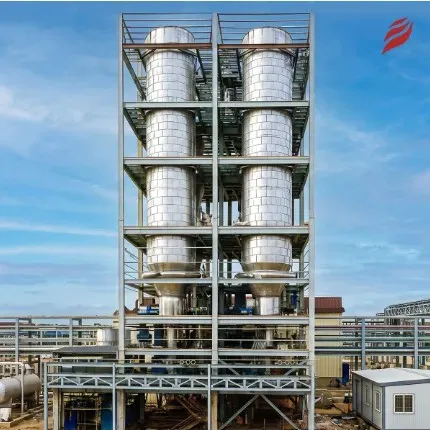
Multi effect evaporator plant | Multi-Effect Evaporator (MEE) | Energy-Efficient Concentration for Process & ETP Concentrate industrial liquids, process streams, and effluents with reduced steam consumption using Shachi’s Multi Effect Evaporator (MEE) plants. Designed for continuous industrial operation, MEE technology makes effective use of the heat already generated within the evaporation process, allowing industries to achieve the desired concentration while reducing dependence on fresh steam. A Multi Effect Evaporator consists of multiple evaporation stages, known as effects, operating at progressively lower pressures and boiling temperatures. Vapour generated in one effect is reused as the heating medium for the next effect. This cascading use of vapour allows the same thermal energy to be utilized multiple times, significantly improving the overall efficiency of the evaporation process. How Multi Effect Evaporation Works The feed enters the first effect, where heat from fresh steam or another suitable heating source causes a portion of the water to evaporate. The vapour generated from this first effect is not simply discharged. Instead, it is directed to the heating side of the second effect. Because the second effect operates at a lower pressure, the liquid inside it boils at a lower temperature. The vapour from the first effect can therefore provide the required heating energy. The same principle continues through subsequent effects: 1.Fresh steam supplies heat to the first effect. 2.Vapour generated in the first effect heats the second effect. 3.Vapour from the second effect heats the third effect. 4.The process continues through the remaining effects. 5.The final concentrated product is discharged from the last stage. By reusing vapour across multiple stages, the MEE plant can achieve a higher evaporation capacity for a given amount of fresh steam compared with a single-effect evaporator. Why Multiple Effects Reduce Steam Consumption In a conventional single-effect evaporator, a large amount of the heat supplied to evaporate water is effectively used only once. In an MEE, the vapour produced during evaporation becomes a useful source of heating energy for the next effect. This heat-reuse principle improves the steam economy of the system. The number of effects, operating temperatures, feed characteristics, evaporation duty, and system configuration determine the actual steam consumption and energy performance. For industries handling large volumes of liquid that require continuous concentration, this can translate into significant savings in thermal energy and operating costs. Designed for Industrial and Wastewater Applications Shachi MEE systems can be engineered for a wide range of applications where water needs to be removed and dissolved solids or valuable components need to be concentrated. Typical applications include: 1.Industrial wastewater concentration 2.High-TDS effluent treatment 3.Chemical and specialty chemical processes 4.Pharmaceutical process streams 5.Textile and dyeing effluents 6.Food and beverage concentration 7.Salt and chemical recovery 8.Process liquor concentration 9.RO reject concentration 10.ZLD system applications 11.Mother liquor and recycle-stream concentration 12.Application-Specific Evaporator Design Every feed behaves differently during evaporation. Some streams may be highly viscous, while others may have a high scaling tendency, foaming behaviour, suspended solids, or heat-sensitive components. Shachi designs MEE plants around the actual characteristics of the feed and the required process outcome. Important considerations include: 1.Feed flow rate 2.Initial and final solids concentration 3.TDS and dissolved salt composition 4.COD and organic content 5.Viscosity 6.Scaling and fouling tendency 7.Foaming characteristics 8.Heat sensitivity 9.Required evaporation capacity 10.Desired final concentration 11.Available steam pressure 12.Cooling-water availability 13.Condensate requirements 14.Plant layout and available space This approach helps ensure that the evaporator configuration, number of effects, heat-transfer arrangement, circulation system, and operating conditions are matched to the application.

Keywords

Other Our Solution

view all

6814772a5d263414004dd4a4 Card 2

product image
Industrial Spray Dryer for Food Industry

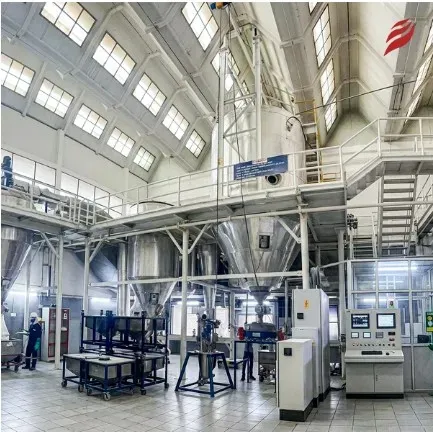
An industrial spray dryer for the food industry converts suitable liquid feeds, solutions, emulsions and slurries into powders through atomization and controlled moisture evaporation. Food ingredients differ in viscosity, solids content, composition and heat sensitivity. These differences influence equipment selection, drying conditions and final powder quality. Applications in Food Ingredient Manufacturing Industrial spray drying is used for: Flavours and Encapsulation: Converting suitable flavour emulsions into powders while considering aroma retention. Seasoning Ingredients: Producing powders for savoury blends and formulations. Fruit and Vegetable Extracts: Drying prepared concentrates into powdered ingredients. Coffee and Tea Extracts: Manufacturing soluble beverage powders. Maltodextrin and Starch Derivatives: Processing suitable carbohydrate solutions. Plant-Based Proteins: Drying selected protein dispersions. Functional Food Ingredients: Processing suitable nutritional formulations. Each product requires an individual process evaluation because identical drying conditions may not produce the same results. Why Feed Properties Matter in Spray Dryer Design Feed viscosity and solids concentration influence pumping, atomization, droplet formation and moisture evaporation. Heat-sensitive ingredients may require careful control to limit flavour loss, colour changes or degradation. Sticky formulations can increase chamber deposition and complicate powder recovery. Final moisture content, particle-size distribution, bulk density and flowability also influence equipment configuration. A food ingredients spray drying plant should therefore be designed around product requirements rather than production capacity alone. How Industrial Spray Drying Works The process involves five stages: 1. Feed Preparation: Establishing suitable concentration, viscosity and feed uniformity. 2. Atomization: Converting liquid feed into droplets inside the drying chamber. 3. Drying: Using heated air to evaporate moisture through heat and mass transfer. 4. Powder Recovery: Separating and collecting dried particles. 5. Powder Handling: Considering cooling, agglomeration or fluid-bed processing where required. These operations must work together to achieve the intended powder specifications. Engineering Considerations for Food Spray Drying Plants Drying Capacity: Feed rate, solids concentration and target moisture determine the evaporation duty. Powder Quality: Particle size, residual moisture, bulk density, solubility and flowability influence process requirements. Hygienic Design: Product-contact materials, cleaning accessibility and contamination prevention require appropriate consideration. Powder Recovery: Fine-particle collection, wall deposition and discharge arrangements affect plant operation. Process Control: Feed conditions and drying-air parameters must be monitored according to the application. An integrated fluid bed may be considered for suitable products requiring additional drying or powder conditioning. Selecting a Spray Dryer for Your Food Product Before selecting spray drying equipment for food processing, manufacturers should define: Product composition and feed characteristics Feed rate, viscosity and solids concentration Required powder production capacity Target moisture and particle-size distribution Bulk density and powder handling requirements Product thermal sensitivity Hygiene and cleaning requirements Available utilities and operating conditions Future capacity or product requirements These inputs establish the technical basis for equipment selection. Industrial Spray Drying Solutions by Shachi Engineering Shachi Engineering provides industrial spray drying equipment and engineering solutions for manufacturing applications. For food ingredient processing, technical evaluation connects feed properties, moisture removal, atomization, drying conditions and powder recovery with the required product specifications. Equipment configuration, food-grade construction options, automation and cleaning arrangements can be evaluated according to project requirements and available solutions. Discuss Your Food Spray Drying Requirements Planning a new food powder manufacturing facility, expanding production capacity or reviewing an existing drying process? Connect with Shachi Engineering to discuss your feed characteristics, powder specifications and production requirements for a suitable industrial spray drying solution.

6814772a5d263414004dd4a4 Card 2

product image
Spray Dryer Plant

Spray Dryer Manufacturer | Industrial Spray Drying Plants The spray drying process begins with the preparation and controlled feeding of the liquid product into the drying chamber. Depending on the feed characteristics, the liquid is atomized using a suitable nozzle or rotary atomizer, breaking it into a fine spray of droplets. These droplets come into contact with a carefully controlled stream of hot drying air. Because each droplet has a very large surface area relative to its volume, moisture evaporates rapidly. The liquid droplets progressively transform into solid or semi-solid particles, which are then separated from the drying air and collected as powder. The basic process can be summarized as: Liquid feed → Atomization → Hot-air contact → Rapid moisture evaporation → Particle formation → Powder separation → Finished product Designed around the product—not just the equipment A major advantage of Shachi’s approach is that the Spray Dryer is designed according to the specific behaviour of the feed material and the required properties of the final powder. Different liquids can behave very differently during drying. Some may be heat-sensitive, sticky, viscous, highly concentrated, or prone to forming deposits on the drying chamber walls. Others may require specific particle morphology, high solubility, or a narrow particle-size distribution. Shachi considers factors such as: 1.Feed viscosity and solids concentration 2.Thermal sensitivity of the product 3.Inlet and outlet temperatures 4.Required final moisture content 5.Desired particle size 6.Bulk density and powder morphology 7.Flowability and dispersibility 8.Solubility or reconstitution requirements 9.Product recovery requirements 10.Production capacity This product-focused design philosophy helps ensure that the dryer is optimized not only for moisture removal, but also for the quality and functionality of the final powder. Precise atomization for controlled particle size Atomization is one of the most important stages of spray drying because the size of the droplets largely influences the characteristics of the finished powder. Shachi systems can be configured with appropriate atomization technology according to the application. By controlling droplet formation and drying conditions, manufacturers can achieve the desired particle-size distribution, particle morphology, density, and flow characteristics. This is especially important when the powder must meet strict specifications for downstream processes such as blending, filling, tableting, encapsulation, dissolution, or further formulation. Gentle drying for heat-sensitive materials Although spray drying uses hot air, the actual product temperature can be significantly lower than the incoming air temperature because evaporation consumes heat. This makes spray drying suitable for many products where rapid moisture removal with controlled thermal exposure is important. Shachi's systems can be engineered around the thermal sensitivity of the product, with appropriate control of air temperatures, residence time, feed conditions, and powder discharge. The objective is to achieve efficient drying while minimizing undesirable effects such as thermal degradation, discoloration, loss of functionality, or changes in product characteristics. Better powder recovery and process efficiency Efficient powder collection is another important consideration in spray dryer design. The drying system can incorporate suitable cyclones, bag filters, scrubbers, or other powder-recovery arrangements, depending on the product and process requirements. Effective separation helps maximize product recovery while maintaining a clean and controlled exhaust system. Proper airflow management and process control also help reduce powder losses and improve overall plant efficiency.

6814772a5d263414004dd4a4 Card 2

product image
Beading Plant/ Spray Cooler

Many oleochemical products—including fatty acids, castor-oil derivatives, waxy materials, and other molten formulations—are difficult to handle, store, transport, and dose in their liquid or solidified bulk form. Shachi’s beading technology addresses this challenge by converting the molten material directly into individual particles. The molten product is first maintained at a carefully controlled temperature to ensure consistent flow and atomization. It is then dispersed through a specially designed spraying system, which breaks the molten material into fine droplets of controlled size. These droplets come into contact with a controlled cooling medium, allowing them to rapidly lose heat and solidify into individual beads. Because the droplet size and cooling conditions can be precisely controlled, the resulting product can achieve a narrow and consistent particle-size distribution. Controlled particle size and shape One of the major advantages of Shachi’s beading systems is the ability to produce particles tailored to the customer's requirements. Parameters such as: 1.Feed temperature 2.Melt viscosity 3.Atomization conditions 4.Spray rate 5.Cooling-air temperature 6.Cooling-air flow 7.Nozzle configuration 8.Residence time can be optimized to control the final bead size, shape, hardness, and bulk characteristics. The result is a product that is easier to handle, convey, weigh, blend, package, store, and dose compared with bulk molten material or irregular solidified lumps. Ideal for oleochemicals and fatty-acid products Shachi’s Spray Cooling and Beading technology is particularly suited to products that are processed in molten form and need to be converted into solid particulate form. Typical applications include fatty acids, castor-oil derivatives, oleochemical intermediates, waxes, and other molten organic materials. The process can help eliminate the need for large-scale solidification followed by crushing, milling, or flaking. Instead, the material can be transformed into a particulate product in a single, continuous solidification operation. Improved product handling Free-flowing beads offer several practical advantages over flakes, blocks, or irregular solidified masses. Their uniform shape and size can improve: Flowability: Individual particles are less prone to forming large lumps and can be handled more easily through hoppers, conveyors, and packaging systems. Dosing accuracy: Controlled particle size makes it easier to feed and meter the product consistently. Storage and transportation: Beaded products are generally easier to package and transport than molten or irregular bulk solids. Downstream processing: Uniform particles can improve blending, dissolution, melting, and formulation operations. ontinuous and efficient production Shachi’s systems are engineered for continuous production, enabling molten feed to be introduced, atomized, cooled, and collected as solid beads in a controlled process. The spray-cooling approach also provides a high surface area for heat transfer. This enables rapid removal of heat from the droplets and efficient solidification, while process parameters can be adjusted according to the thermal and physical properties of the product.